
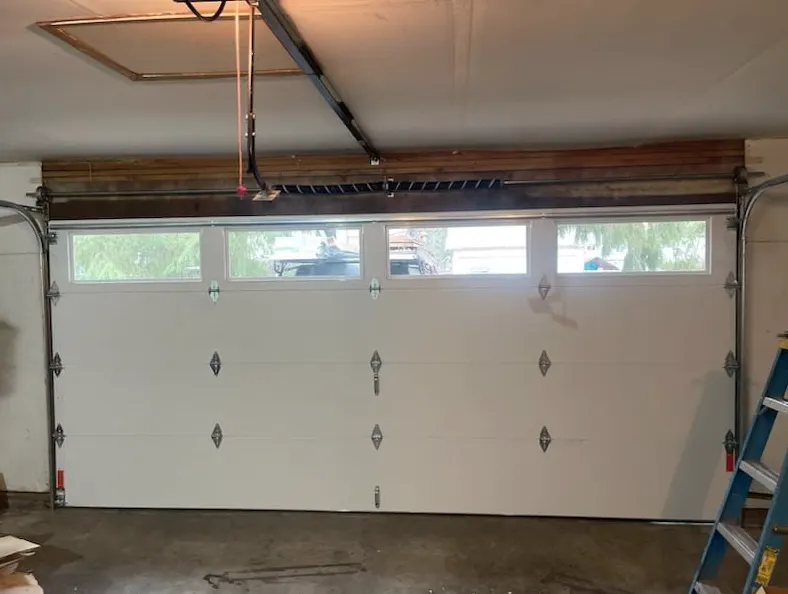
Order a new garage door without thinking through the windows, and you're living with that decision for the next fifteen to twenty years. Skip it this season and you end up with one of two regrets: a door full of glass that turns your garage into a fishbowl every time you pull in after dark, or a solid slab that leaves the space dim and stale all winter when the rain keeps the door shut for days at a time. Either way, it's not a cheap fix to change your mind later. Window layout is one of the few garage door decisions that's genuinely hard to undo once the door is installed.
What Windows Actually Change on a Garage Door
Windows aren't just a style choice. Every pane you add trades off against something else:
- Light — more glass means more natural light inside the garage, which matters if you use the space as a workshop, gym, or storage area you actually walk into during the day.
- Privacy — clear glass shows everything inside: your car, your tools, your stored valuables. That's a real consideration for doors facing the street or a neighbor's driveway.
- Security — glass is a weak point compared to steel or insulated panel. A row of windows at eye level gives anyone walking by a clear view of whether you're home and what's worth taking.
- Insulation — even a well-made window has a lower R-value than an insulated steel panel. More glass generally means more heat transfer, in both directions.
None of these trade-offs is automatically bad. The point is knowing which one you're prioritizing before you pick a design, instead of discovering the downside after the door is hung.
What to Look For
Glass placement
A single row of small windows near the top of the door lets in light without putting your garage contents on display at eye level. Windows lower on the door, or full panel cutouts, show a lot more of what's inside — fine if there's nothing in there you care about anyone seeing, less fine if you keep bikes, tools, or a second vehicle in plain view.
Glass type
Obscure, frosted, or textured glass gives you daylight without the clear sightline. It's worth the small upcharge if your garage faces a street or a neighbor's window. Clear glass looks sharp in photos but offers zero privacy.
Insulated glass units
If insulation matters to you — and with hot inland summers and the heat that builds up in a closed garage, it usually should — ask specifically about double- or triple-pane insulated glass units set into the window frame, not just a single pane snapped into a cutout. The difference in heat transfer is significant, especially on a door that gets afternoon sun.
Tempered safety glass
Any window at a height someone could reasonably hit with a ball, a car door, or a dropped tool should be tempered. It's a small spec line, but skipping it on a cheaper door means a shattered window is a sharp-edged hazard instead of a minor inconvenience.
What to Ignore
Decorative grille inserts snapped onto a solid panel to fake the look of windows are purely cosmetic — they don't add light or airflow. That's not a problem if you just want the look, but don't pay a premium expecting function you're not getting. Also don't put much weight on marketing language like "designer glass" or "premium window package" without asking what glass type and insulation rating is actually behind it. Ask for the specifics, not the label.
Questions to Ask Before You Buy
- What's the R-value or insulation rating of the glass option compared to the solid panel?
- Is the glass tempered, and is that standard or an upgrade?
- Can window placement be moved to a higher row for privacy without changing the overall design?
- What does obscure or frosted glass cost compared to clear, and does it come in the same window shapes?
- If a window cracks or the seal fails, can it be replaced individually, or does the whole panel need to be swapped?
That last question matters more than it sounds. A failed seal on an insulated glass unit shows up as fogging or moisture between the panes — a known issue on any door, but one that shows up faster here given how much the garage temperature swings between a hot, dry inland summer and the damp stretch of winter rain. Knowing whether that's a simple panel repair or a full-door replacement before you buy saves a headache later.
Local Factors Worth Weighing
A few things specific to this area are worth factoring into the decision. Dry-season dust and wildfire smoke settle on exterior glass just like they do on windshields, so windows with more surface area need more upkeep to stay clear. Inland summer heat means a lot of glass on a west- or south-facing door picks up real solar heat gain in the afternoon — something to weigh against the insulation numbers above. And if your garage faces the street, winter's shorter daylight hours mean interior lights are on more often, making clear glass an easier way for anyone outside to see in.
When to Call Tracy Garage Door Co
If you're replacing an aging door and trying to land on the right window layout for your garage's light, privacy, and insulation needs, that's exactly the kind of decision worth talking through before you order anything. Our Garage Door Installation service includes walking through glass type, placement, and insulation options against how you actually use the space — not just picking from a catalog photo. And if you already have windows that are fogged, cracked, or leaking air around the frame, our Garage Door Maintenance visits can assess whether it's a simple seal or glass swap versus a sign the whole panel needs attention.
If you're weighing a new garage door and want straight answers on windows before you commit, call Tracy Garage Door Co — serving Tracy, CA and the surrounding area.