
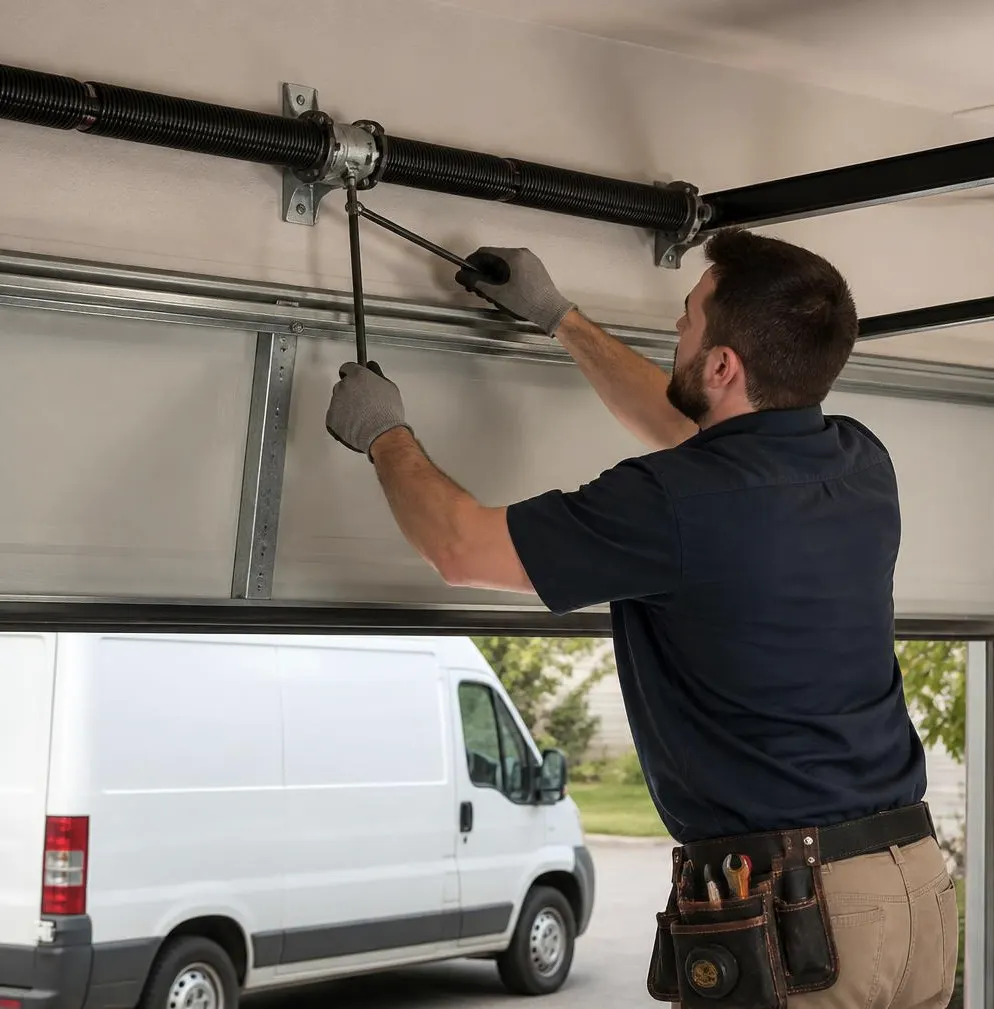
Here's what a technician usually finds when someone calls in asking about a cold or hot garage that seems to be dragging down the whole house's comfort: daylight visible along the bottom of the door, flattened or cracked vinyl weatherstripping that's clearly years past useful, a gap at one of the top corners where the door doesn't sit flush, and sometimes a door that's visibly bowed from years of sun exposure on the outside panel. None of that is dramatic. It's just wear, and it adds up.
Why a Leaky Garage Door Shows Up on Your Utility Bill
An attached garage isn't sealed off from the rest of the house the way most people assume. It shares at least one wall with living space, and in a lot of homes it also houses the water heater, the HVAC return duct, or ductwork running overhead to a bonus room. When the garage door leaks air, the garage itself swings closer to outdoor temperature, and that heat (or cold) pushes through the shared wall and any ducts or water heater sitting in there.
In practice that means two separate things happening at once:
- Direct transfer: a hot garage in summer radiates heat into the adjacent room through the shared wall, so your AC runs longer to hold that room at temperature.
- Duct and equipment losses: if ducts or a water heater sit in the garage, a wide swing in garage temperature means more heat loss (or gain) from that equipment, which the system then has to make up elsewhere in the house.
During hot inland stretches, an uninsulated steel door can turn a garage into something close to an oven by mid-afternoon. In winter, the same gaps let in cold, damp air during rain, and the garage never really warms up, which keeps that shared wall cold too.
It's Not Just About Temperature
Dry-season dust and wildfire smoke get pulled through the same gaps a draft uses. If you've ever opened the interior door from the garage and noticed a layer of dust on stored items that wasn't there before, that's infiltration, not just normal settling. The same gaps that let conditioned air escape let outside particulates in, and some of that air exchanges with the house every time the interior door opens.
How to Tell If the Door Is Actually the Problem
Before you spend money, it's worth confirming the door is actually the culprit and not just a convenient scapegoat. Walk around the inside of the closed door on a sunny day and look for:
- Light coming through at the bottom, sides, or top corners
- Weatherstripping that's cracked, flattened, or pulling away from the track
- A visible gap where two panels meet, especially near the center hinge
- Rust streaks or soft spots at the bottom panel after winter rain, which usually means water has been getting past the bottom seal for a while
- A door that looks straight from the outside but doesn't sit flush against the frame when closed — often a sign of warping or a misaligned track
If you see two or more of these, the door is contributing to the problem, not just getting blamed for it.
What Actually Fixes It (and What Doesn't)
Not every fix is worth the same investment, so it helps to know the order of operations:
- Replace the bottom seal and side/top weatherstripping first. This is the cheapest, highest-impact fix for most homes and often solves the draft complaint entirely, especially if the seals are old vinyl that's hardened and stopped flexing.
- Add an insulation kit to the panels if the door is a hollow single-layer steel door. This helps most with radiant heat in summer and is a middle-tier investment compared to full replacement.
- Check the astragal (the seal where the door meets the garage floor) and the stop molding around the frame — these get overlooked but matter as much as the bottom seal.
- Consider full replacement with an insulated door only if the current door is warped, the panels are rusting through, or it's old enough that seals and weatherstripping no longer seat properly no matter how many times they're replaced.
What doesn't help much: caulking around a door that's structurally warped, or adding insulation panels to a door whose seals are shot — the air will still get in around the edges regardless of what's inside the panel.
When to Call Tracy Garage Door Co
If you've checked for daylight and worn seals and you're still not sure whether the door or the house envelope is the issue, a technician can tell the difference in one visit. Our Garage Door Maintenance service includes checking panel alignment, weatherstripping condition, and whether the door is closing flush and balanced — the three things that actually control air leakage. If the door itself is the limiting factor, we'll walk you through Garage Door Installation options with insulated panels sized for inland heat swings, no pressure either way.
If you're in Tracy, CA or nearby and want a straight answer on whether your garage door is actually costing you money, call Tracy Garage Door Co for an inspection — we'll tell you plainly what's worth fixing and what isn't.